


Kilimo Cha Haki Kenya has intensified its campaign against genetically modified organisms (GMOs), urging the government to protect citizens from what it termed “dangerous products” and to halt what it describes as the privatization of the country’s seed sector.

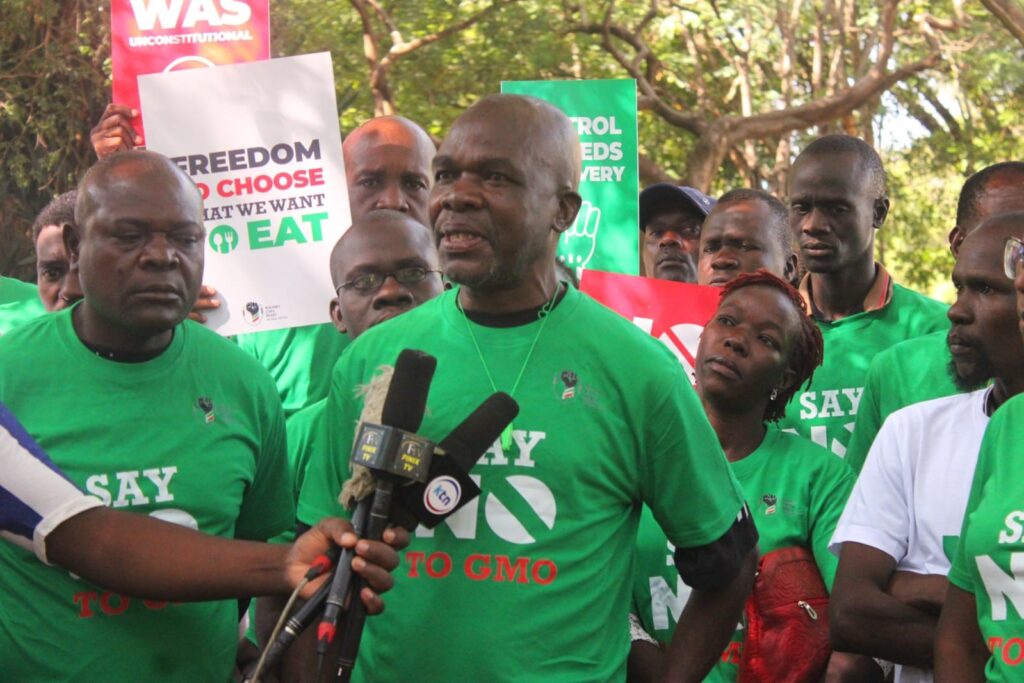
The lobby group, born out of the 2024 Gen Z protests, staged a peaceful picket in Kisumu’s CBD, with members clad in branded “No To GMO” T-shirts and carrying placards denouncing the government’s decision to legalize GMOs in 2023.
Speaking during the demonstration, the organization’s convener, Mary Kathomi Riungu, said the movement would not relent in its push for what it called sound agricultural policies and meaningful public participation in decision-making.
“Today we are in the Nyanza region, Kisumu chapter, mobilizing and informing people about the dangers of GMOs,” said Kathomi. “You are aware that GMOs were legalized in Kenya in 2023 without public participation. We are not going to go down without fighting.”
Gathomi declared that the group would pursue the matter “in the streets, in court, and in every corner” until GMOs are banned in the country. She accused the government of undermining constitutional protections for indigenous seeds, alleging that plans to privatize the Kenya Seed Company amount to surrendering national assets to private interests.
“The Constitution protects our indigenous seeds, yet the government wants to hand over the Kenya Seed Company to an individual through privatization. That is unacceptable,” she said.
The activist further claimed that GMO products are linked to rising cancer cases in the country and criticized what she described as the high cost of GMO seeds, fertilizers, and pesticides. She argued that farmers are burdened by expensive inputs without adequate government subsidies.
“We know there are studies showing GMOs are causing cancer. Farmers must buy seeds, pesticides, and fertilizers with zero subsidy. We are saying no to GMOs and calling on the people of Nyanza to understand its effects,” she said.
Byron Akello, representing Kisumu Voices, echoed the concerns, saying residents were determined to resist the spread of GMO products.
“We are tired. We are here in solidarity to say no to GMOs. We do not want to spend our retirement benefits on treatment because of what we are consuming today,” Akello said.
Sherril Mboya, an indigenous farmer from Kisumu, warned that the introduction of GMOs and the proposed privatization of the seed company risked eroding local agricultural autonomy.
“As organic farmers, we are here to say no to GMOs. This feels like we are being colonized while watching. If we are feeding our children, it is upon us to know exactly what we are giving them. GMO is harmful and should not be consumed,” she said.
Kilimo Cha Haki Kenya has vowed to continue nationwide mobilization efforts, maintaining pressure on the government to reverse its policy and involve farmers more directly in shaping the country’s agricultural future.