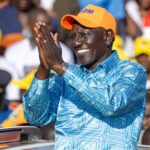


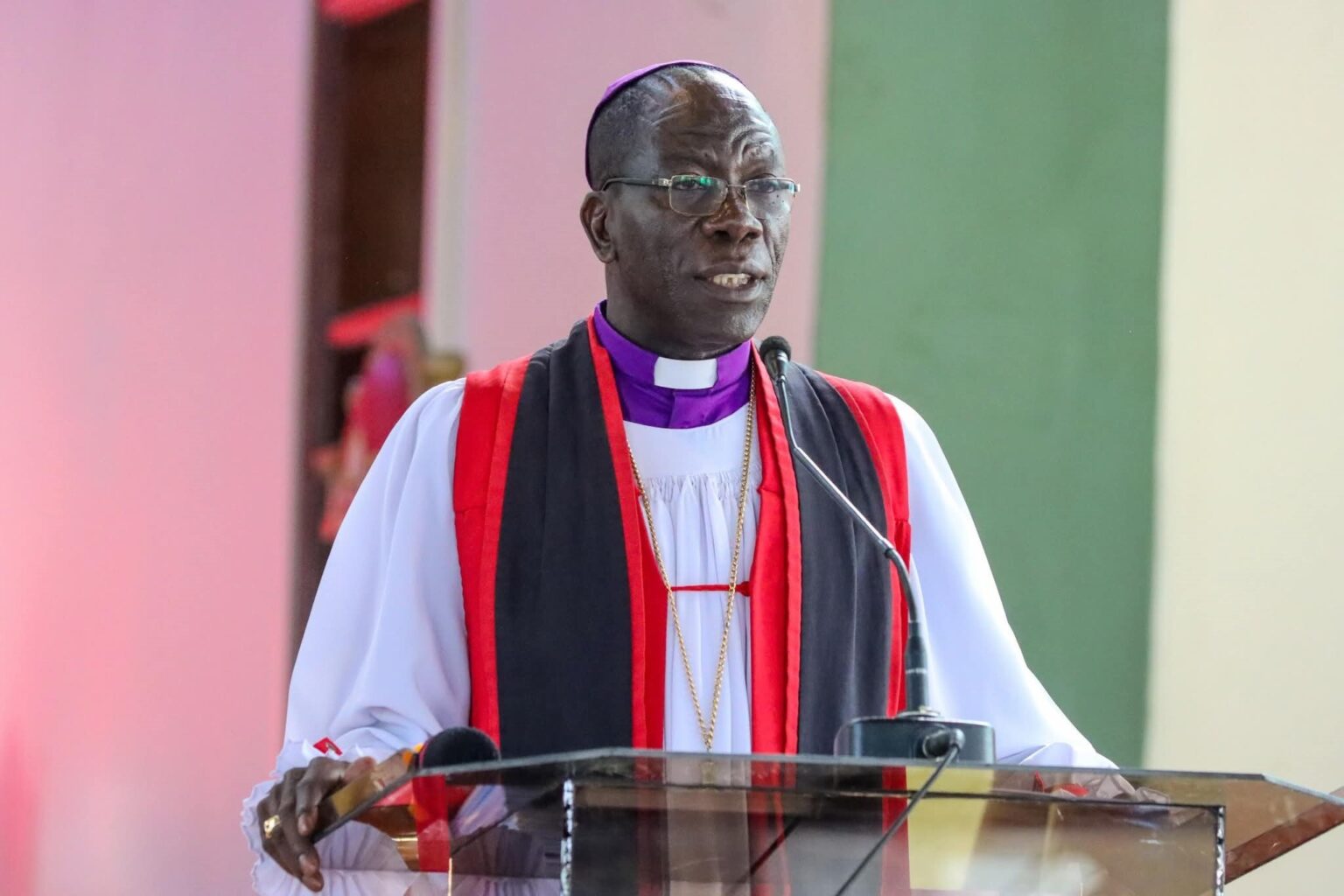
The Bishop of the Anglican Diocese of Maseno South, Rt. Rev. Charles Ong’injo has launched a sharp attack on President William Ruto, accusing him of deliberately undermining the Orange Democratic Movement (ODM) and politically exploiting the Luo community.

Speaking on Friday during a funeral service in Kolwa Central, Kisumu East Sub-county, Bishop Ong’injo claimed the Head of State is orchestrating divisions within ODM following the death of former Prime Minister Raila Odinga. He alleged that President Ruto has a calculated plan to weaken the party’s structures, strip it of its influence, and ultimately reduce it to a political shell.
“It is not ODM members who are splitting the party. It is President Ruto who gives some politicians money in the darkness,” Ong’injo said. “Once he reduces ODM into a shell without strength or structures, he will have his way.”
The bishop further alleged that the President’s long-term strategy is to dismantle ODM strongholds by sponsoring independent candidates who would later serve as political proxies, helping him entrench power and push constitutional changes.
Ong’injo warned that the President is using attractive narratives to lure communities for political gain, saying the Luo community is now being courted with promises of transforming the region into a “Singapore,” just as the “bottom-up” economic model was used to woo the Kikuyu community ahead of the 2022 elections.
“He knows Luos like good things; that is why he is selling the Singapore narrative,” Ong’injo said. “He will leave you stranded and move to another community with another story. Don’t say I didn’t warn you.”
He also criticised ODM leaders supporting the government’s broad-based and “Tutam” narrative, likening them to prisoners unsure of when they will be released, and urged them to use their current positions to secure tangible development for the region while they still can.
Turning to education, the cleric urged leaders in Nyanza to prioritise investment in school infrastructure, warning that future policies may require communities to rely on local institutions.
“A time is coming when everyone will be told to play at their home ground,” he said. “If we don’t have good schools for our children, we will be in serious trouble.”
Citing academic performance at Maseno School, Ong’injo questioned why top results often benefit students from outside the region, warning that without deliberate planning, the community risks celebrating success that does not uplift its own children.
“We must think carefully. If we don’t, we will face a big problem,” he cautioned.