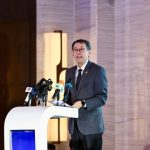


Under the warm coastal skies of Mombasa, the Kenya National Union of Teachers (KNUT) concluded its 64th Annual Delegates Conference (ADC) in a grand affair that showcased unity, resilience, and a firm stand for educators’ rights. Held at the Sheikh Zayed Hall, renowned for hosting high-profile events, the conference marked the culmination of months of AGMs and training sessions across KNUT’s 110 branches nationwide.

The event attracted international attention, with unions from Zanzibar, Rwanda, and Denmark in attendance. Their dignitaries commended Kenyan teachers for their unwavering dedication to their profession amidst challenging conditions.
A Platform for Advocacy
KNUT Secretary-General Collins Oyuu seized the opportunity to spotlight critical issues affecting Kenyan teachers. Addressing Teachers Service Commission (TSC) CEO Dr. Nancy Macharia, who was among the distinguished attendees, Oyuu didn’t shy away from pointing out the pressing challenges.
“Automated promotions from job group B5 to C1 are overdue,” he emphasized, calling for equitable opportunities across counties. He also urged TSC to end punitive delocalization of administrators and embrace more humane transfer policies.

Oyuu’s fiery address touched on several other issues:
- Streamlining promotions and cascading them to county and sub-county levels.
- Prioritizing interns in TSC recruitment to improve job security for young educators.
- Advocating for TSC to oversee the employment of Early Childhood Development (ECD) teachers, arguing that county-led recruitment lacks transparency and merit.
A Tenure of Industrial Harmony
Dr. Nancy Macharia, whose tenure as TSC CEO nears its end, reflected on her journey, highlighting industrial harmony between TSC and KNUT. She praised KNUT for prioritizing dialogue during disputes and noted her satisfaction in improving teacher remuneration. However, she acknowledged the challenges of implementing controversial policies like the Competency-Based Curriculum (CBC) and the Teacher Performance Appraisal and Development (TPAD) system.
“My lowest moments were when KNUT resisted these reforms,” Macharia confessed. “But I leave with my shoulders high, knowing we’ve achieved significant milestones together.”
Climate, Technology, and Education
KEPSHA Chairman Johnson Musyoka introduced broader themes, including the impact of climate change and the need for technological integration in schools. He urged stakeholders to collaborate and ensure Kenyan learners remain globally competitive.

Taxation and JSS Representation
Bumula MP Jack Wanami Wamboka passionately advocated for reducing the heavy tax burden on teachers, highlighting deductions like SHA, NSSF, AON, the Housing Levy, Provident Fund, and PAYE.
Junior Secondary School (JSS) representative Omari Omari brought youthful energy to the conference, demanding structured representation for JSS teachers within KNUT. He called for at least three slots per branch and urged school heads to understand the unique dynamics of younger educators.
Resolutions for a Stronger Future
The conference concluded with a resolution to include JSS representation within KNUT, a testament to the union’s commitment to inclusivity and addressing emerging challenges in education.

As delegates left Mombasa, they carried with them a renewed sense of purpose and a unified vision for a better future for Kenyan teachers and learners alike. The KNUT ADC remains not just a meeting of minds but a powerful testament to the enduring spirit of the teaching fraternity.