


A bold campaign to dismantle gender stereotypes in science and technology has taken root in Kisumu, as education, technology, and government stakeholders rally behind efforts to empower girls through STEM (Science, Technology, Engineering, and Mathematics) and TVET (Technical and Vocational Education and Training).

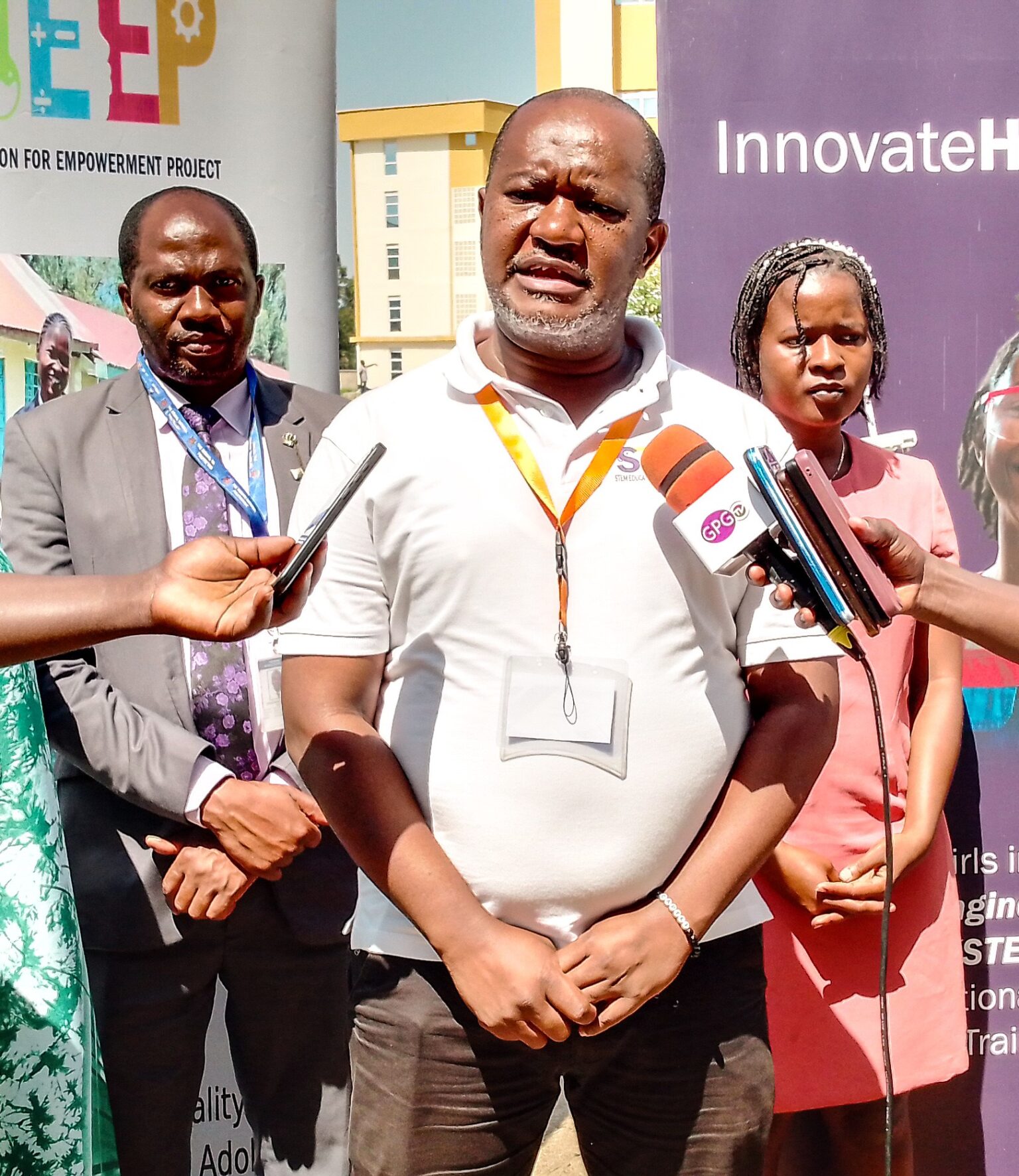
The push was evident during a STEM Career Fair held at The Kisumu National Polytechnic, where 13 secondary schools were represented. The event, led by the STEM Empowerment Project (STEEP), showcased hands-on opportunities available to girls in technical fields—fields often dominated by men.
Caroline Ogutu, from the Ministry of Education’s Quality Assurance and Standards Directorate, emphasized that the ministry is actively supporting gender equality and career progression in STEM, particularly for girls affected by social and economic setbacks.
“In the Ministry of Education, we strongly support gender equality and ensure that girls continue with their education despite the challenges they face,” said Ogutu. “That’s why initiatives like STEEP are critical. In Kisumu and other counties, the project is helping us reach teenage mothers and bring them back to school many of them are now pursuing STEM-related courses.”
Ogutu reiterated the ministry’s goal to ensure that 60% of learners transition into STEM career pathways, a strategy she said is being implemented through strategic partnerships and mentorship programs.
“Today’s event at Kisumu Polytechnic is a reflection of that mission. We’re working with partners like Ajira, STEEP, and Innovator to promote interactive learning and exposure to real-world opportunities,” she noted.
She praised the ongoing collaboration for its impact in addressing challenges such as teen pregnancy, which continues to derail education journeys for many girls in the region.
“We’re now seeing young mothers return to school, regain their confidence, and enroll in technical courses,” Ogutu added. “TVETs are providing them with a second chance and a solid platform to rebuild their future.”

Joshua Mose, the Registrar at Kisumu National Polytechnic, said the institution has fully embraced the STEM agenda and continues to mainstream gender equity in its admissions and staffing.
“I am here on behalf of our Chief Principal, Madam Caren Kalonye. As a TVET institution, we are deeply committed to empowering the youth, especially the girlchild,” Mose said. “We have a gender mainstreaming policy in place, and with support from STEEP, we’re bolstering our STEM departments to attract and retain more girls.”

He also highlighted the recent education reforms by the government, which introduced a skill-based curriculum launched in May 2025.
“Many students who didn’t make it to university now find opportunities in TVET institutions,” Mose noted. “This modernized curriculum equips them with practical skills, enabling them to build careers in science and technology.”
Erick Nyamiombo, STEEP Project Coordinator at CAP Youth Empowerment Institute, said their main objective is to break long-standing gender stereotypes that deter girls from pursuing science and engineering.
“There’s still a strong misconception that STEM is for boys. We’re working directly with adolescent girls in both school and out-of-school contexts to challenge that narrative,” Nyamiombo explained. “We operate in Kisumu, Siaya, Homa Bay, Kakamega, Kisii, and Nyeri, engaging eight secondary schools per county. Today, these 13 schools are here to connect students with STEM opportunities in TVET.”

Adding to that momentum, Wycliffe Orina from the Ajira Digital Program under the Ministry of ICT said their partnership with STEEP is helping girls gain valuable digital skills to break into the tech space.
“Our goal is to mentor girls in computing and other digital skills, so they can confidently pursue courses like software development, data analysis, and engineering,” Orina said. “In the last three years, Ajira has rolled out several tech programs within TVETs to support girls who are often excluded from digital careers.”
As the event wrapped up, the message was clear: Kenya’s future in science and innovation must include girls. Through joint efforts from institutions like Kisumu National Polytechnic, government agencies, and youth empowerment projects like STEEP, the barriers once blocking young women from STEM careers are being dismantled, one step, one student at a time.