


Cane farmers in Chemelil have unanimously rejected the government’s proposal requiring farmer and miller representatives in the sugar industry to hold university degrees. Speaking during public participation forums held at Chemelil Grounds in Muhoroni Sub County on January 14 , the farmers argued that a degree is unnecessary for effective representation, advocating instead for integrity and practical knowledge as the key qualifications.

Photo/Jandiko
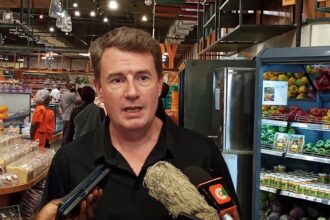
Edward Owalo, Director of Agriculture at Chemelil Sugar Company, emphasized the importance of integrity over academic credentials.
“The people who are being elected should be enlightened and have some knowledge. We want integrity and the quality of the person—not a degree—to represent cane farmers,” Owalo stated, thanking farmers for their large turnout at the forum.
His sentiments were echoed by Charles Owino, a representative of the Muhoroni Sub-County Chamber of Commerce, who argued that the degree requirement would disenfranchise many farmers with vast sugarcane farms.
“Most of our farmers, despite owning large chunks of land, do not have degrees. A Form Four certificate or diploma should suffice. Degrees would exclude the best candidates for representation,” Owino said.
Owino also criticized the allocation of cess funds by the county government.
“Our roads are poorly maintained and impassable. The cess collected by the county government is not benefiting us. We propose that cess funds be redirected to farmer committees to prioritize road repairs and improve transportation for sugarcane,” Owino added.

Tom Okal, a farmer from Chemelil, proposed reforms to ensure transparency in elections for grower representatives.
“We need a voter register at each polling station, similar to political elections. As for cess funds, they should be plowed back into the cane-growing areas to improve roads, which are currently dilapidated and hinder transportation, especially during the rainy season. A growers’ committee should manage these funds,” Okal noted.
The public participation forums also addressed issues related to the location of the Kenya Sugar Board offices, which are currently in Nairobi, far from sugar-producing regions.
“The sugar board offices should be relocated to Kisumu, closer to the millers in Nyanza and Western regions, including Chemelil, Muhoroni, and Awendo. This would improve accessibility and efficiency,” Owino added.
Farmers also called on the government to stop sugar imports from Brazil, arguing that local producers need protection to remain competitive.
Samuel Ong’ou, director of the Agriculture and Food Authority (AFA), praised the efforts of Kisumu Senator Prof. Tom Ojienda and Nandi Senator Samson Cherargei for advocating for regional representation in the Senate.
“The government’s goodwill presents an opportunity for us to improve our livelihoods as sugarcane farmers. Let us unite, elect competent representatives, and make the most of this chance,” Ong’ou urged.

The forums, held between January 13 and 16, 2025, were part of the implementation of the Sugar Act No. 11 of 2024, which established the Kenya Sugar Board. The Act outlines procedures for electing grower and miller representatives and imposes a sugar development levy under Section 40.
Kenya’s sugarcane zones are divided into five regions: the Central Zone (Kisumu, South Nandi, and Kericho), Western Zone (Kakamega, Siaya, and Busia), Upper Western Zone (Bungoma and Trans Nzoia), Southern Zone (Homa Bay, Migori, and Narok), and Coast Zone (Kwale and Tana River).
The feedback from these forums will shape the final implementation of the Sugar Act’s provisions.