

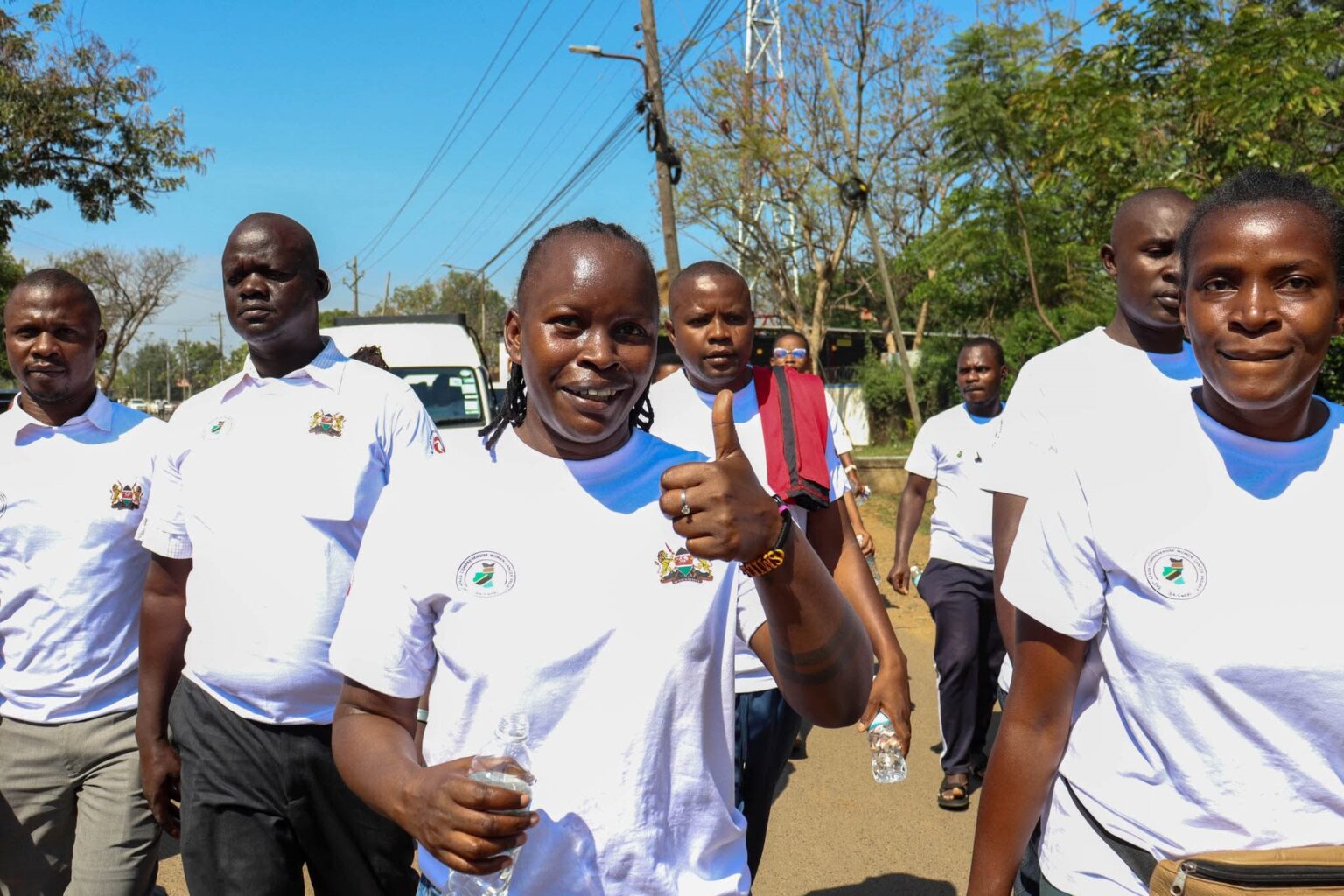
Hundreds of residents took to the streets of Kisumu on Tuesday in a powerful show of solidarity to mark Breast Cancer Awareness Month, joining a global campaign advocating for early detection and timely treatment of the disease.
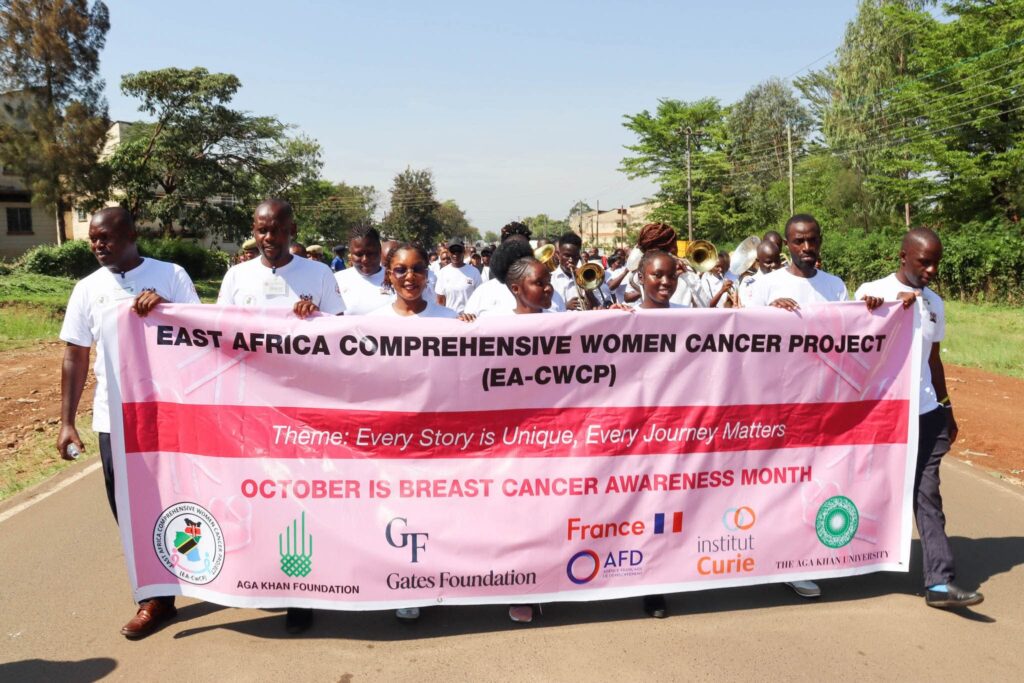
The community walk, organized by Aga Khan Hospital, Kisumu in partnership with a network of public and private institutions, rallied participants under the theme “Early Detection Saves Lives.” The procession began at Aga Khan Hospital and wound through major city routes from Aga Khan Hall Roundabout to Mamba, Patel Roundabout, and Kondele before returning via the Kisumu–Kakamega Highway.
Health experts described the event as a symbolic march of hope and resilience against a silent killer that continues to claim thousands of lives each year.
“Here in Kenya, we record about 7,000 new breast cancer cases annually, and sadly, more than half of these patients die due to late-stage diagnosis,” said Dr. Alfred Mayani, Resident Oncologist at Aga Khan Hospital Kisumu. “Early screening and awareness remain our most powerful weapons.”
Despite being one of the most treatable cancers when detected early, breast cancer remains a leading cause of female mortality in Kenya. Dr. Mayani noted that over 99 percent of cases occur in women, with only about 1 percent affecting men. He cited contributing factors such as hereditary genes, hormonal imbalances, radiation exposure, and lifestyle risks, including obesity, alcohol consumption, and physical inactivity.
“We have risk factors, but not all are preventable,” he added. “That’s why self-breast examinations and annual screenings, especially for women aged 40 to 70, are vital. The cornerstone of prevention is knowing your body.”
Kenya, he said, has made significant progress in cancer treatment, offering surgery, chemotherapy, radiotherapy, and hormonal therapies locally. However, late presentation remains a major obstacle.
“Once symptoms become severe, it often means the disease has progressed beyond the early stages,” he cautioned.
The Aga Khan Hospital also offers screening for other major cancers, including cervical, prostate, colorectal, and coronary cancers. Men above 40 were urged to undergo Prostate-Specific Antigen (PSA) tests, as prostate cancer remains the leading cancer among males.
Kennedy Mulama, Director of the East African Comprehensive Cancer Project (EA-CWCP) at Aga Khan Hospital, announced plans to expand cancer outreach across Western Kenya.
“Today, we are offering free breast and cervical cancer screenings,” Mulama said. “Our goal is early diagnosis, because breast cancer is treatable when found early. We are teaching our youth that cancer is not a death sentence.”
Central Bank of Kenya representative Rebecca Amani emphasized the importance of community awareness in dispelling stigma and misinformation.
“Awareness means timely diagnosis, and timely diagnosis means survival,” she said. “That’s why we are here, to spread hope.”
The march concluded at the hospital courtyard, where participants lit pink candles in memory of those lost to cancer and in celebration of survivors who continue to inspire others through their recovery journeys.
The event drew support from major institutions, including the Central Bank of Kenya, Kenya Power and Lighting Company, Kenya Wildlife Service, Huduma Centre, University of Nairobi, KRA, KIWASCO, and the Judiciary of Kenya, a united front in the fight against one of the world’s most persistent health challenges.