

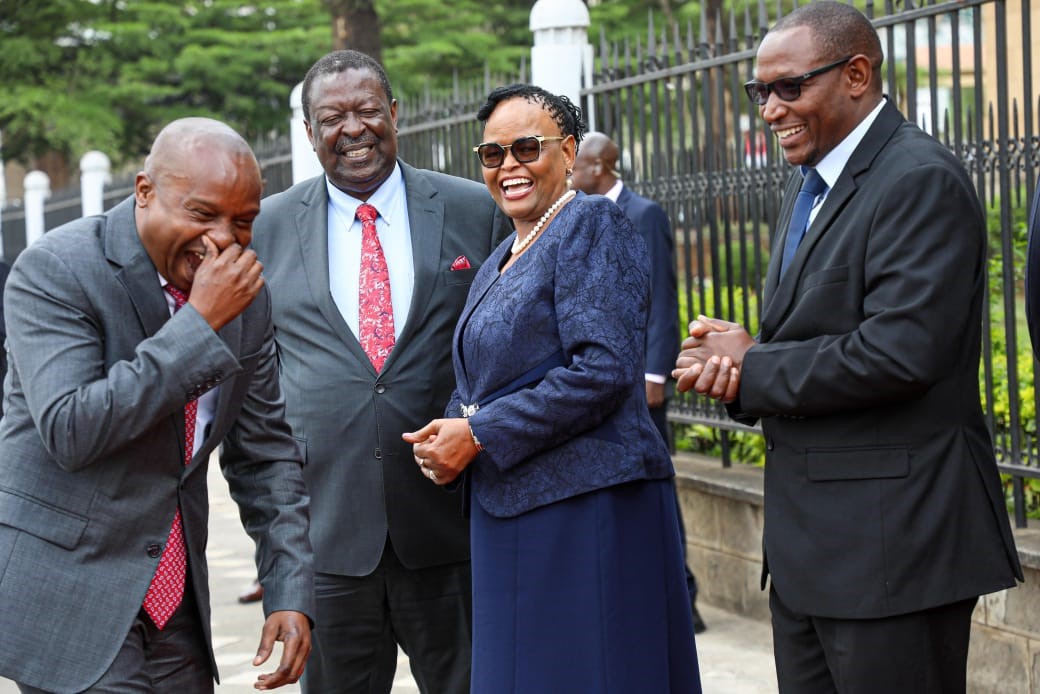
Kenya Kwanza’s campaign promise to uphold the rule of law and strengthen judicial independence has been pivotal to President William Ruto’s governance. From his inauguration, Ruto demonstrated a commitment to enhancing judicial efficiency, swearing in six judges previously rejected by his predecessor and increasing judicial funding to ease financial constraints hampering justice delivery.
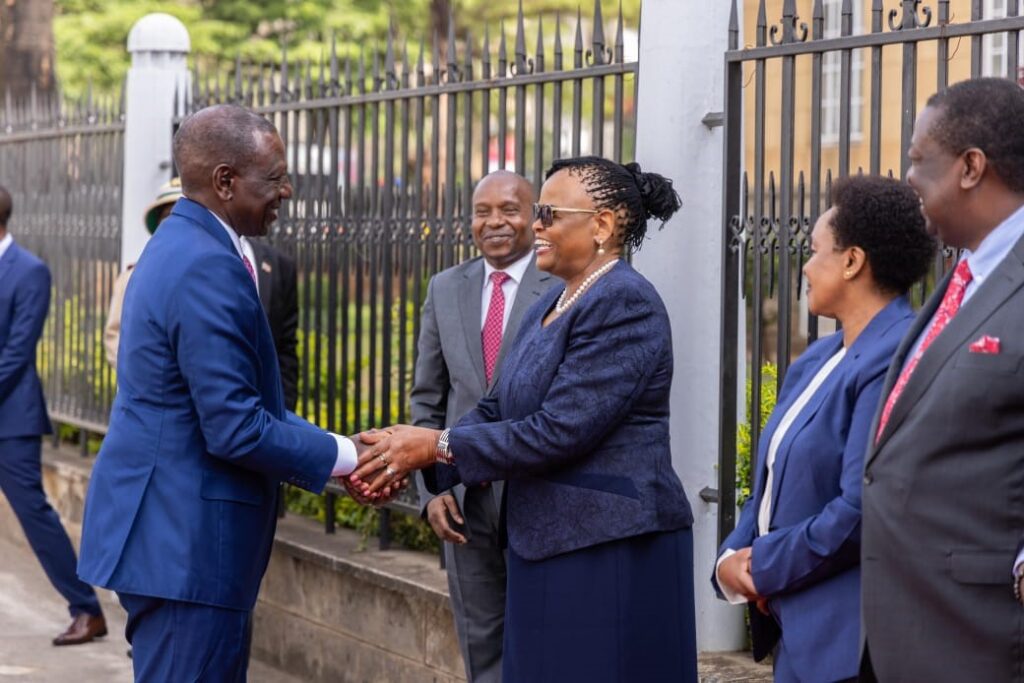
However, the relationship between the executive and judiciary has been a complex rollercoaster, oscillating between cooperation and confrontation. While the judiciary has upheld several key government initiatives, it has also imposed legal hurdles that have slowed down or modified the administration’s agenda.
Judicial Wins and Setbacks for Ruto’s Administration
One of the administration’s flagship healthcare reforms, the Social Health Insurance Fund (SHIF), faced constitutional challenges. The High Court ruled that parts of the Social Health Insurance Act (SHIA), Digital Health Act (DHA), and Primary Health Care Act (PHCA) were unconstitutional. Undeterred, the government appealed, and the Court of Appeal upheld the entire SHIF rollout. Despite this victory, implementing SHIF remains a work in progress.
The Affordable Housing Levy, a key component of Ruto’s promise to create jobs and tackle housing challenges, faced fierce opposition in court. After lengthy legal battles, the Court of Appeal ruled on October 22, 2024, that sufficient public participation had taken place, dismissing six petitions challenging the Affordable Housing Act. This decision cleared the path for the program’s rollout.
GMO Ban and Food Security
To address food insecurity, the administration lifted the ban on Genetically Modified Organisms (GMOs), sparking litigation from activists citing health concerns. In 2023, Environment Court Justice Oscar Angote ruled that Kenya’s biosafety regulatory framework was robust enough to manage GMO risks. Justice Lawrence Mugambi later upheld this ruling, solidifying the government’s position and enabling the adoption of GMO crops.
International Relations and the Haiti Police Deployment
Ruto’s commitment to global peace faced legal hurdles when the High Court blocked Kenya’s deployment of police to Haiti, citing a lack of a reciprocal agreement with Haiti’s government. This ruling prompted swift diplomatic action, culminating in a bilateral security deal with Haiti’s Prime Minister Ariel Henry. The agreement cleared the way for the deployment, showcasing Ruto’s ability to navigate legal challenges through diplomacy.
Political Intrigues and the Deputy President’s Appointment
The judiciary also played a critical role in the swearing-in of Deputy President Kithure Kindiki. After a Kerugoya Court barred the swearing-in, the government successfully appealed. A three-judge bench overturned the ruling, emphasizing constitutional continuity in the office of the Deputy President. This decision not only underscored judicial independence but also demonstrated the executive’s reliance on legal channels to resolve political impasses.

Balancing Governance and Judicial Oversight
The judiciary’s interventions have sometimes drawn criticism. Recently, COTU Secretary General Francis Atwoli lamented the delays caused by court cases on government projects, calling for constitutional reforms to curb such legal impediments.
While these judicial interventions have occasionally slowed the government’s pace, they highlight Kenya’s robust checks and balances, ensuring that executive actions align with constitutional principles. Ruto’s ability to adapt to these challenges, whether through appeals, diplomacy, or legislative adjustments, underscores his administration’s resilience in navigating Kenya’s dynamic governance landscape.
Kenya’s judiciary, through its rulings, continues to shape the trajectory of Ruto’s governance, balancing between facilitating and scrutinizing executive actions—proving that in Kenya, the law remains supreme.