


In an effort to advance Kenya’s climate goals, Deputy Chief of Staff for Delivery and Performance, Hon. Eliud Owalo, spearheaded a large-scale tree-planting event at Maseno School in Kisumu County, where 10,000 trees were planted as part of the government’s ambitious program to plant 15 billion trees.
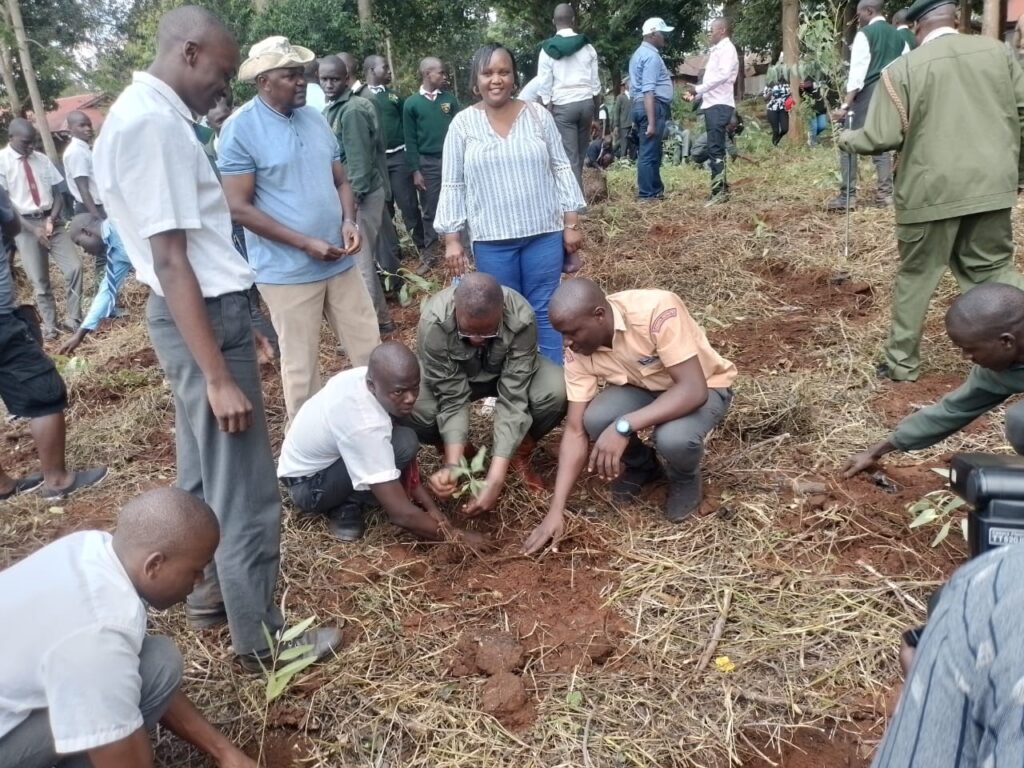
Speaking at the event, Owalo emphasized the importance of environmental stewardship, urging Kenyans to take up tree planting to aid climate resilience. He highlighted the government’s commitment to providing tree seedlings across the country, calling on each citizen to contribute by planting at least one tree in their community.
With the event coinciding with the final preparations for Maseno School’s KCSE candidates, Owalo—an alumnus of the school—offered his best wishes to the students, encouraging them to approach their exams with confidence.
Owalo further detailed the critical role tree planting plays in President William Ruto’s environmental manifesto.
“Planting trees is more than an environmental measure; it’s essential for sustainable living and conserving water resources,” he said.
Owalo shared his personal contribution of planting over one million trees since the program’s inception, underscoring the need for collective dedication.
Kisumu County, currently at an 8.85% tree cover, aims to reach the national goal of 10% in the coming years, while Kenya overall targets a 30% tree cover within the next decade. Owalo encouraged Kisumu residents to redouble their efforts to help the county meet its annual goal of nine million new trees.

Through collaboration with entities like KenGen, the Kenya Forest Service, and various NGOs, over four million trees have already been planted nationwide since the initiative began. Owalo welcomed more partners to join the initiative, aligning Kenya’s efforts with global sustainable development goals.
Highlighting the broader government agenda, Owalo pointed to several priority areas in the “bottom-up” economic transformation agenda, including agriculture, housing, ICT, healthcare, and support for micro-enterprises. He noted that through fertilizer subsidies, the government has lowered production costs in agriculture, contributing to a reduction in food prices, which make up 63% of Kenya’s cost-of-living index. Additionally, he cited the construction of over 113,000 housing units and the creation of 260,000 jobs under the housing program, as well as the disbursement of over Ksh 50 billion through the Hustler Fund.
Concluding, Owalo highlighted advancements in healthcare through Universal Health Coverage (UHC) and in ICT through the establishment of digital hubs nationwide. He emphasized that these initiatives are key to building Kenya’s resilience and strengthening the livelihoods of its people.