

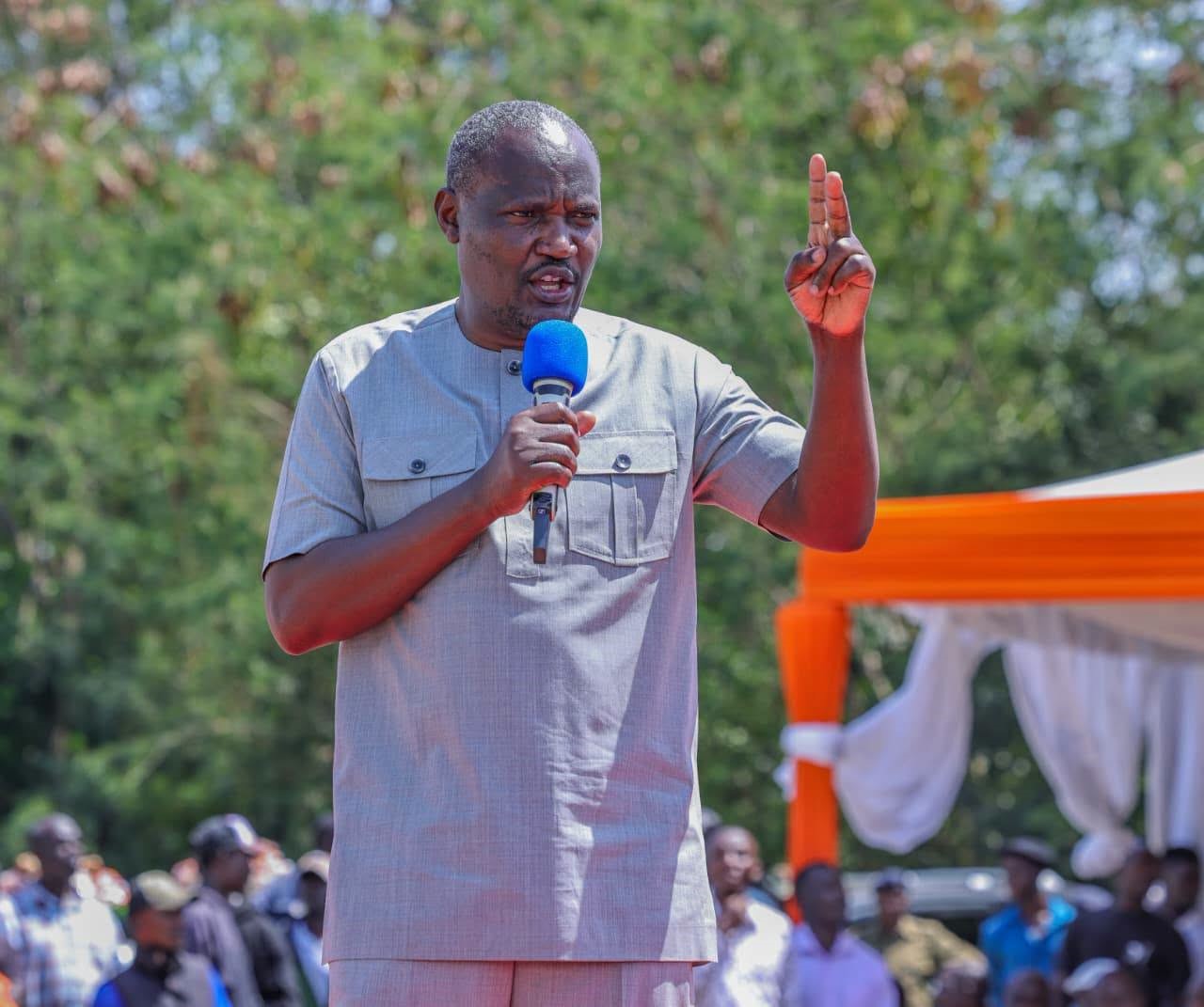

Treasury Cabinet Secretary John Mbadi has defended the appointment of six members to the National Infrastructure Fund (NIF) Board, dismissing claims that the selection process was driven by ethnic considerations.

Speaking in Kisumu on Friday during an economic empowerment programme, Mbadi said the appointments, which took effect on July 8, 2026, were made in strict compliance with Section 13(1) of the National Infrastructure Fund Act, 2026, under subsections (a) and (b).
He explained that the law provides for the appointment of four independent directors and public officers selected on the basis of their professional expertise and experience.
Mbadi said the board members were chosen through a competitive recruitment process and not on the basis of tribe, hitting out at politicians and social media users who have claimed that the Luo community was excluded from the appointments.
“We interviewed 15 Kenyans. One of them was from Nyeri, and we did not leave him out because he came from Nyeri. Latoya Ouna is from Siaya. This propaganda about which tribe has been left out should stop. There were only four positions, and they cannot be shared among all the 42 tribes,” Mbadi said.
He noted that Ouna’s appointment was based solely on her credentials in asset management and investment banking, not her ethnic background.
“The people claiming there is no Luo on the board are wrong. The lady from Siaya was not appointed because she is Luo but because of her extensive experience in asset management and investment banking,” he added.
Mbadi urged critics to stop what he termed as ethnic propaganda, insisting that the National Infrastructure Fund would be managed professionally and not through political or ethnic considerations.
He said the appointed board members possess unquestionable integrity, competence, capability and experience required to steer the fund.
The six appointees are James Mworia Mwirigi, Chief Executive Officer of Centum Investment Company, Fahima Ali Ahmed Zein, Christopher Kibui Maranga, Latoya Ouna, Lawrence Kibet, and Mohamed Abdirahaman Hassan, who was appointed under subsection (b) of the Act.
Mbadi said the National Infrastructure Fund is expected to play a key role in reducing Kenya’s reliance on borrowing by mobilising domestic resources to finance critical infrastructure and development projects.