



For decades, Luo Nyanza has remained one of Kenya’s most formidable opposition strongholds, often voting overwhelmingly against successive governments. That political tradition appeared set to continue after the 2022 General Election, when the region overwhelmingly backed the Azimio coalition, leaving many residents convinced that they would receive little representation in President William Ruto’s administration.

When President William Ruto unveiled his first list of senior government appointees, expectations in the region were understandably low. However, among the names announced were Eliud Owalo and Dr. Raymond Omollo, the latter appointed as Principal Secretary for the State Department for Internal Security and National Administration.
Unlike Owalo, who was already a familiar political figure in the region, Dr. Omollo was largely unknown in Luo Nyanza’s political circles. His appointment surprised many observers, but over time, his leadership style has distinguished him from many of his predecessors.
Rather than seeking the political limelight, Omollo has built a reputation as a quiet administrator who prefers delivering results behind the scenes. His low-profile approach has been complemented by a sustained grassroots engagement strategy that has steadily strengthened the government’s presence across the four Luo Nyanza counties of Kisumu, Siaya, Homa Bay and Migori.
One of the hallmarks of his outreach has been a series of community empowerment programmes targeting vulnerable groups.
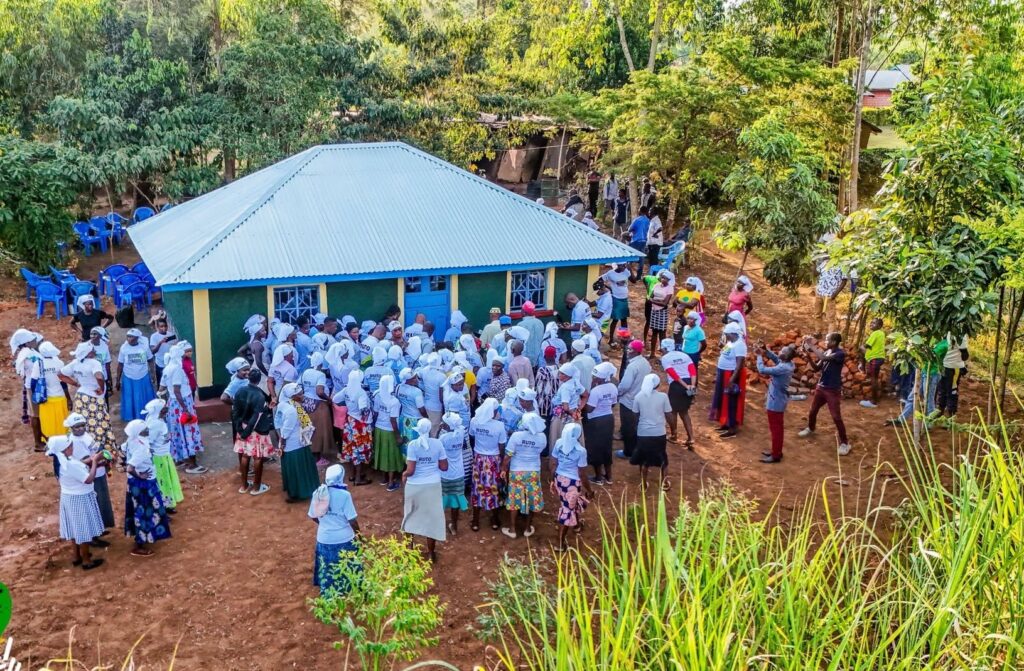
Through widow empowerment initiatives, hundreds of widows have benefited from improved housing, support for small businesses, registration of community groups, and easier access to government grants and credit facilities. The programmes have not only enhanced livelihoods but also restored dignity to many families struggling with economic hardship.
Youth empowerment has equally featured prominently in Omollo’s development agenda.
Under the Kenya Youth Transition Initiative, young people have been encouraged to register community groups and receive tools of trade, including car wash equipment and other income-generating resources. The initiative has also promoted national identity card registration and encouraged eligible youth to register as voters, helping foster civic participation while steering many away from crime and unemployment.
Women have also emerged as major beneficiaries through the Jiwo Mwanadada Foundation, which focuses on economic empowerment and the fight against gender-based violence and femicide.
The foundation has distributed equipment such as blow dryers and deep fryers to support small businesses, while women’s groups have received tents and chairs for commercial hire, creating sustainable sources of income. Additionally, the registration of women-led community-based organisations has enabled many groups to qualify for government grants and other development opportunities.
Education has remained another pillar of Omollo’s community engagement.
Working with various philanthropic organisations and development partners, he has supported the distribution of supplementary reading materials to schools to improve literacy levels. Schools across the region have also benefited from lockers, menstrual hygiene products for girls, and donations supporting both learners and teachers in co-curricular and academic activities.
His support has extended to churches, schools and community institutions through fundraising initiatives aimed at improving infrastructure and expanding access to social services.
In recent months, Omollo has increasingly used his official social media platforms to highlight ongoing national government development projects in Luo Nyanza. By explaining the purpose and expected benefits of various projects, he has sought to bridge the information gap that has often fuelled public scepticism towards government programmes.
Political observers argue that these consistent community-focused initiatives have gradually softened public attitudes towards the Kenya Kwanza administration in a region historically viewed as politically hostile to the ruling party.

That shift became increasingly visible during the United Democratic Alliance (UDA) grassroots elections in Luo Nyanza, which proceeded peacefully and attracted notable participation, a development many attribute to changing perceptions about the government’s engagement with the region.
While political loyalties in Luo Nyanza remain deeply rooted, Omollo’s development-centred approach has demonstrated that sustained grassroots engagement and service delivery can gradually reshape public opinion. Whether that momentum ultimately translates into electoral gains for UDA in the 2027 General Election remains to be seen, but his growing influence has undoubtedly become an important factor in the party’s evolving fortunes in one of Kenya’s most politically significant regions.