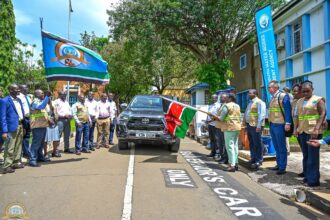
As the curtain falls on a five-day Blue Economy Conference at Tom Mboya University College in Homa Bay County, glaring challenges of fragmented governance, underdeveloped infrastructure, and weak community participation continue to cast a shadow over Kenya’s vast aquatic potential.

Despite these obstacles, the government reaffirmed its ambition to unlock the Blue Economy, which spans fisheries, aquaculture, maritime transport, and coastal tourism. The conference, attended by national and regional stakeholders, highlighted both strides made and gaps remaining in the journey toward sustainable aquatic development.
Dr. Wycliffe Ochiaga, Director of the Lake Basin Development Authority (LBDA), emphasized the importance of coordinated development across the Lake Victoria catchment region, covering 18 counties.
“Our mandate is to deliver integrated development programs across the catchment area. Coordination is critical to ensure optimal use of resources,” said Dr. Ochiaga.
He cited ongoing LBDA projects including a modern aquaculture training and hatchery center in Kisumu, powered by solar energy, which supplies high-quality fingerlings and imparts modern aquaculture techniques to farmers. LBDA’s model also includes rice and livestock value chains, gender and youth inclusion, and private sector partnerships with tech firms such as Aquarech.
Nationally, reforms are underway. The 2016 creation of the State Department for Blue Economy and Fisheries has spurred initiatives such as the Kenya Fisheries Policy 2023 and new marine regulations in 2024. The National Blue Economy Coordination Platform (NBECP) aims to centralize interagency dialogue, while alignment with Sustainable Development Goal 14 underlines Kenya’s global commitments.
Initiatives driving aquaculture transformation include:
- Aquaculture Business Development Programme (ABDP): Empowered over 18,000 smallholder farmers and introduced improved Sagana tilapia strains.
- Youth in Sustainable Aquaculture Project (YISA): Aims to create 150,000 youth jobs while promoting inclusive policy development.
- Project Mila (Mombasa): Promotes a circular economy by converting waste into insect-based fish feed.
Yet, despite the momentum, persistent bottlenecks remain. A conference executive brief highlighted structural issues including:
- Policy fragmentation delaying projects such as cage farming.
- Poor intergovernmental coordination between national and county levels.
- Infrastructure gaps, notably in cold storage and transport logistics.
- Marginalized community roles, especially youth, women, and artisanal fishers.
- Weak market access for small-scale aquaculture entrepreneurs.
To bridge these gaps, experts propose a framework anchored on six pillars: regulatory harmonization, joint governance, climate-resilient management, inclusive aquaculture financing, legal empowerment of fisher communities, and stronger market linkages.
Recommendations include establishing a National-County Dialogue Platform, adopting a unified national Blue Economy and Fisheries Policy, and investing in climate-smart data systems and research.
As Kenya seeks to chart a new course toward a resilient Blue Economy, coordinated policy, inclusive participation, and science-based planning will be crucial. With regions like the Lake Victoria Basin offering replicable models, stakeholders say it’s time to turn rhetoric into action—and waves of potential into sustainable growth.