

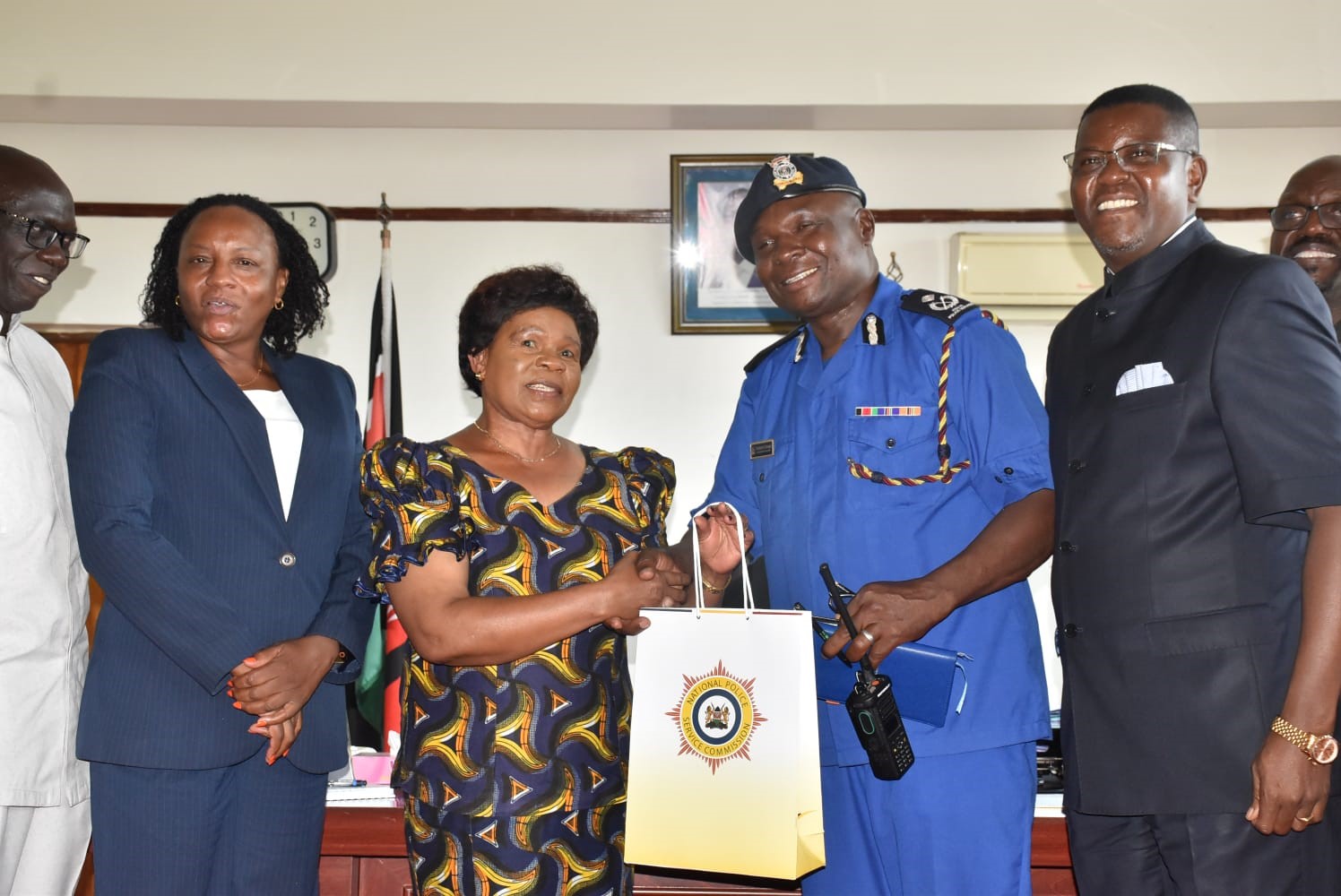

The National Police Service Commission (NPSC) has launched a high-level inspection tour of its regional offices in Nakuru, Kisumu, and Eldoret, in a move aimed at tightening oversight and boosting service delivery across the country.

The exercise, which kicked off on April 19, is set to run until April 24, 2026.
Speaking to the media at the Nyanza Regional Commissioner’s office in Kisumu on Tuesday, NPSC Chairperson Dr Amani Yuda Komora said the visits are designed to reinforce the Commission’s institutional presence while addressing operational gaps within its regional structures.
Komora said the tour will involve a thorough review of operations, coupled with structured engagements with staff to obtain first-hand insights into how effectively the Commission’s mandate is being implemented on the ground.
“The engagement will entail a comprehensive inspection of operations within the regional offices, as well as structured interactions with staff to obtain first-hand insights into the implementation of the Commission mandate,” he said.
He noted that the Commission will also assess institutional capacity in a bid to identify challenges undermining efficiency and effectiveness. The findings, he added, will guide policy direction, inform strategic decisions, and shape future resource allocation.
A key highlight of the tour is the rollout of the National Police Service Commission (Amendment) Act, 2025, which formally embeds counselling and psychosocial support as a core function of the Commission.
According to Komora, the new law empowers the NPSC to establish psychosocial support units and implement programmes aimed at promoting the mental health and overall well-being of police officers.
“The legislation empowers the Commission to establish psychosocial support units and roll out programmes promoting the mental health and overall wellbeing of police officers,” he said.
The law further provides for the establishment of fully equipped psychosocial support centres in all counties, including within police stations, camps, training institutions, and communities, to ensure accessible and continuous support services.
Komora noted that the initiative builds on the existing Policy on Counselling and Welfare (2018), which facilitated the deployment of professional counsellors and social workers across regions.
He added that the Commission will use the ongoing tour to evaluate whether regional offices are adequately prepared to support the expanded mandate under the new law.