


Hundreds of civil society organisations (CSOs) drawn from Kisumu, Siaya, Homa Bay and Kakamega counties have raised alarm over the growing influence of divisive, identity-based politics as the country edges closer to the 2027 General Election.
The groups warned that since 2025, public discourse has increasingly been dominated by political alignments, personality-driven narratives and rhetoric centred on ethnic configurations, at the expense of development and service delivery.
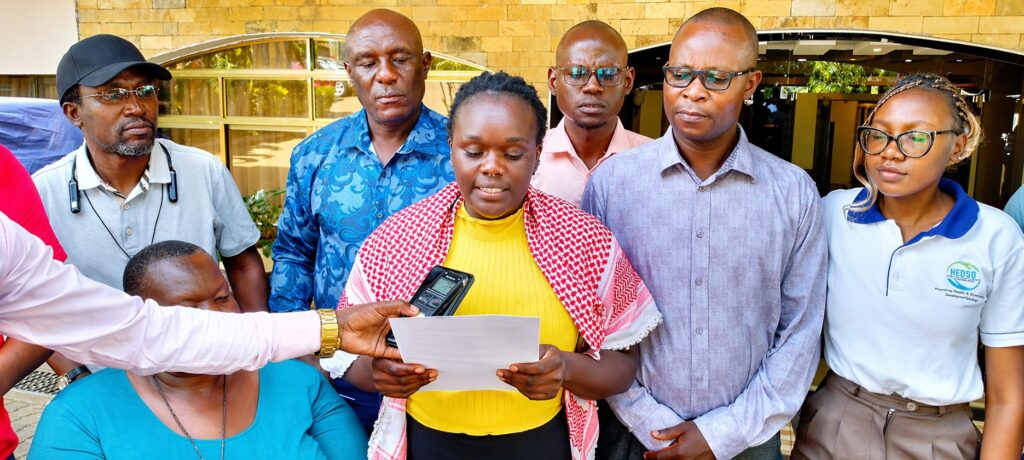
Speaking to the media, CSOs alliance coordinator Kennedy Anjejo noted that election periods in Kenya have historically been marked by a decline in public oversight, as national attention shifts from scrutinising government expenditure to electoral competition.
He cautioned that the current trajectory risks repeating this pattern, potentially eroding hard-won gains in transparency, accountability and citizen-led oversight at both national and county levels.
“We have seen a shift in focus from development to campaigns. Today, over 80 groups have converged in Kisumu to deliberate on security, development, fairness in elections, and flooding. Issues of political alignment are not our agenda,” said Anjejo.
He added that the organisations are also encouraging young people to register for national identification documents and voter cards in preparation for the upcoming elections.
“We want citizens to focus on development and ask the critical question: are we electing leaders based on their track record and service delivery?” he posed.
The CSOs further observed that the political environment this year has become increasingly saturated with identity-based narratives framed as ‘alignment’ debates, focusing on who supports whom and which ethnic blocs are coalescing.
They warned that such discourse not only deepens polarisation but also diverts attention from key governance concerns, including equitable resource allocation, public service delivery and integrity in public office.
The organisations cautioned that if left unchecked, the trend could reverse gains made through citizen engagement and accountability initiatives, weakening mechanisms meant to hold leaders accountable.
“Divisive electioneering undermines public participation and weakens the structures designed to ensure accountability,” the groups said in a joint statement.
They urged citizens to safeguard their democratic rights by ensuring they are registered as voters and by verifying the accuracy of their registration details.
The CSOs emphasised that elections should serve as a platform for evaluating leadership based on performance, integrity and service delivery, not ethnic affiliation or political alliances.