


NAIROBI, Oct. 15 (Xinhua) — The four principles proposed by Chinese President Xi Jinping for resolving Africa’s hotspot issues have resonated across the continent, with diplomats, scholars and media professionals hailing them as timely and practical guidance for promoting peace and development in Africa.

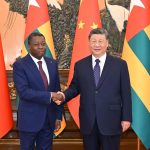
The four principles — adhering to the principle of “Africa-led,” upholding fairness and justice, promoting ceasing hostilities for peace, and addressing both symptoms and root causes — were put forward on Tuesday in Beijing during Xi’s meeting with Faure Essozimna Gnassingbe, president of the Council of Ministers of Togo, who is on an official visit to China.
Noting that the proposal comes at a time when conflicts across the continent are compounded by external interference and intensifying geopolitical rivalries, African experts said they support its emphasis on building lasting security through African ownership, international fairness, peaceful dialogue and sustainable development.
AFRICAN OWNERSHIP
At the heart of the four principles is the “Africa-led” approach, under which the African people are the true masters of Africa, and should play a central role in regional affairs.
Claudio Rabenja, a Malagasy economist and international affairs expert, said the principle is “relevant and particularly important in the current geopolitical context,” as crises in Africa stem from complex local factors that outside actors often fail to understand.
“Solutions imported from or imposed by external actors do not always provide lasting answers,” he said, adding that Xi’s approach responds to Africa’s aspiration to stop being a battleground for major-power rivalry and is consistent with China’s tradition of non-interference.
Similarly, Etienne Bankuwiha, a Burundian sinologist, said Xi’s proposal “consolidates the fundamental principle of African solutions to African problems,” affirming that African countries are entitled to choose their own partners and development paths while rejecting externally imposed governance agendas.
Emmanuel Yenshu Vubo, dean of the Faculty of Social and Management Sciences at the University of Buea in Cameroon, said Africa “is not and cannot be reduced to mere spheres of influence or former colonial units that have only nominal independence … Africa should be its own master.”
FAIRNESS AND JUSTICE
The principle of upholding fairness and justice calls on all parties to abide by the principles of the UN Charter and respect the sovereignty and territorial integrity of the countries concerned.
Rabenja said respect for sovereignty and the UN Charter helps safeguard territorial integrity, curb destabilizing interventions and promote the peaceful settlement of disputes.
“It is essential that African countries be able to resolve their disputes without being subjected to pressure that runs counter to their national interests,” he said, noting that China’s consistent stance gives African governments greater freedom to make their own choices.
Gerard Njoya, editor-in-chief of Actu Chine Cameroon, said the principle reinforces the African Union (AU)’s Agenda 2063 by opposing unilateral sanctions and arbitrary interventions, addressing the long-standing demand for “an end to interference and double standards.”
Balew Demissie, a senior consultant at the Policy Studies Institute of Ethiopia, said the principle’s call for consistent application of international law underscores the need to treat African countries fairly and with dignity.
PEACE THROUGH DIALOGUE
Noting that wars and unilateral sanctions cannot fundamentally resolve conflicts, experts said the principle of promoting peace through a cessation of hostilities calls for mutual respect, extensive consultations, seeking common ground while setting aside differences, and fostering mutual understanding and accommodation.
Moutlakgola Masire, a journalist at Radio Botswana, said multi-stakeholder consultations and ceasefire commitments can prevent further civilian suffering and open the way for sustainable settlements.
Rabenja said military confrontation without a credible political process often fails to eliminate the root causes of violence.
“Mutual concessions do not mean abandoning fundamental principles,” he said. “They recognize that lasting peace often requires arrangements acceptable to all parties.”
China’s diplomatic experience and relations with African countries can help support mediation, complementing the efforts of the AU, subregional organizations and the United Nations, he said.
Njoya said ending hostilities through dialogue aligns with the AU’s Silencing the Guns initiative, offering an approach to conflict resolution rooted in African values.
SECURITY AND DEVELOPMENT
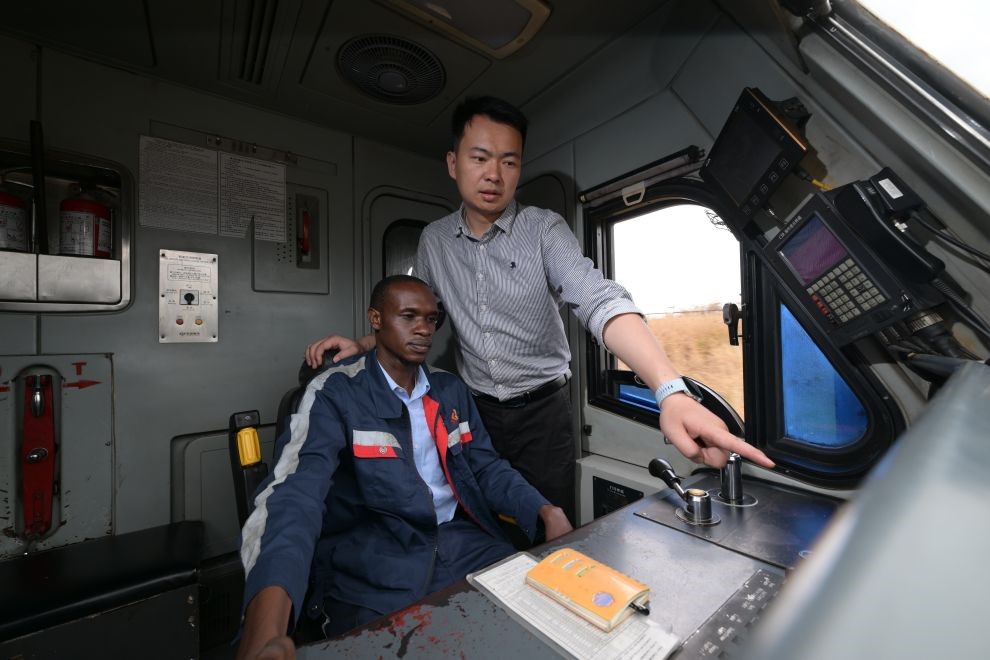
As the principle of addressing both symptoms and root causes calls for tackling immediate security threats while pursuing long-term development, experts said China can help Africa address its challenges, citing its contributions to infrastructure construction, scholarships and vocational training across the continent.
Rabenja called security and development “two inseparable dimensions of stability.”
Beyond protecting civilians in the short term, he said, the underlying causes of conflict — poverty, youth unemployment, inequality and weak institutions — must be addressed through investment in education, agriculture, energy, infrastructure and industrialization.
“Security creates the conditions necessary for investment, while development reduces some of the vulnerabilities that can fuel conflict,” he said.
Njoya said addressing root causes is essential to achieving the goals of Agenda 2063, adding that the principle “endorses the AU’s integrated approach, which seeks to tackle poverty, youth unemployment and inequality — the underlying causes of instability.”
Bankuwiha said China-Africa cooperation in agriculture, industrialization, poverty alleviation, green transition and infrastructure provides the economic empowerment needed to address the structural drivers of conflict in regions such as the Horn of Africa and the Lake Chad Basin.
Observers said the four principles forge “a new framework of equal partnership” that respects Africa’s independent choices.
“Taken together, these four principles can serve as a practical reference guide for settling past, present and future hotspot issues in Africa,” Demissie said.