

The Kenya Export Promotion and Branding Agency (KEPROBA) has launched a series of nationwide exporters’ roundtable forums to gather critical industry insights to raise export volumes and sharpen Kenya’s global competitiveness ahead of the Annual Exporters Convention set for June 26, 2026.

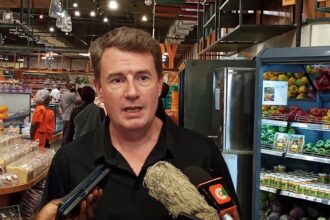
Speaking to journalists in Kisumu on Tuesday, KEPROBA officials, led by CEO Floice Mukabana, announced that Uasin Gishu, Mombasa, Nyeri, and Naivasha will host the next forums. The engagements bring together exporters, financial institutions, logistics operators, business associations, and government agencies to find lasting solutions to challenges affecting the country’s export sector.
Mukabana noted that Kenya’s export performance has remained resilient despite global economic uncertainty and the disruptions caused by the post-COVID-19 era.
“Surprisingly, and especially concerning exports, we did not experience a downturn. But there is always room for improvement,” she said. “As part of our work, we have identified key products to support under the government’s Bottom-Up Economic Transformation Agenda (BETA) agenda, livestock and livestock products, textiles, and traditional exports like tea, coffee, and flowers.”
She said the Bottom-Up Economic Transformation Agenda (BETA) framework has enabled KEPROBA to anchor a diversified export strategy focused on value addition, product development, and global market access through exhibitions and trade missions.
Mukabana also revealed that even though the AGOA deal officially expired on Tuesday, Kenya is engaging in negotiations to secure an extension. She said Kenya remains competitive, noting that the country falls under African nations with a 10 percent incremental tariff threshold, lower than tariffs applied to some of its key competitors.
The CEO said KEPROBA’s new strategic plan is designed to propel Kenyan products into major international markets and drive the country toward its 2028 export ambitions. The first step, she said, is diversifying both products and markets beyond traditional exports.
“Through our 2028 strategic plan, we have identified activities that will help us achieve that vision. We intend to diversify products and markets, so we move away from the traditional base of tea, coffee, and nuts and introduce new products with access to global markets,” Mukabana said. “That is why leather and livestock remain priority areas. Even with existing products, we are adding value and expanding beyond traditional markets. Today we are talking about Uganda, the UAE, the East African Community, the UK, and the US for our textiles and apparel.”
Mukabana emphasized that Kenya’s iconic products, tea, coffee, and nuts, must be elevated to global premium status. She said KEPROBA is working to create a national brand for these products, including pushing for the implementation of the Geographical Indication System Bill. The legislation would legally anchor high-quality Kenyan products, secure intellectual property protections, and unlock premium pricing in international markets.
“Our duty is to ensure these iconic products remain central to Kenya’s global narrative,” she said.