


The government is seeking to unlock Kenya’s vast blue economy potential by developing a comprehensive maritime investment policy and incentive regime aimed at attracting local and foreign investors while creating jobs and boosting economic growth.

The government is gathering views from stakeholders in the maritime industry through public participation forums to refine the proposed policy and ensure it addresses the sector’s challenges while opening up new investment opportunities.
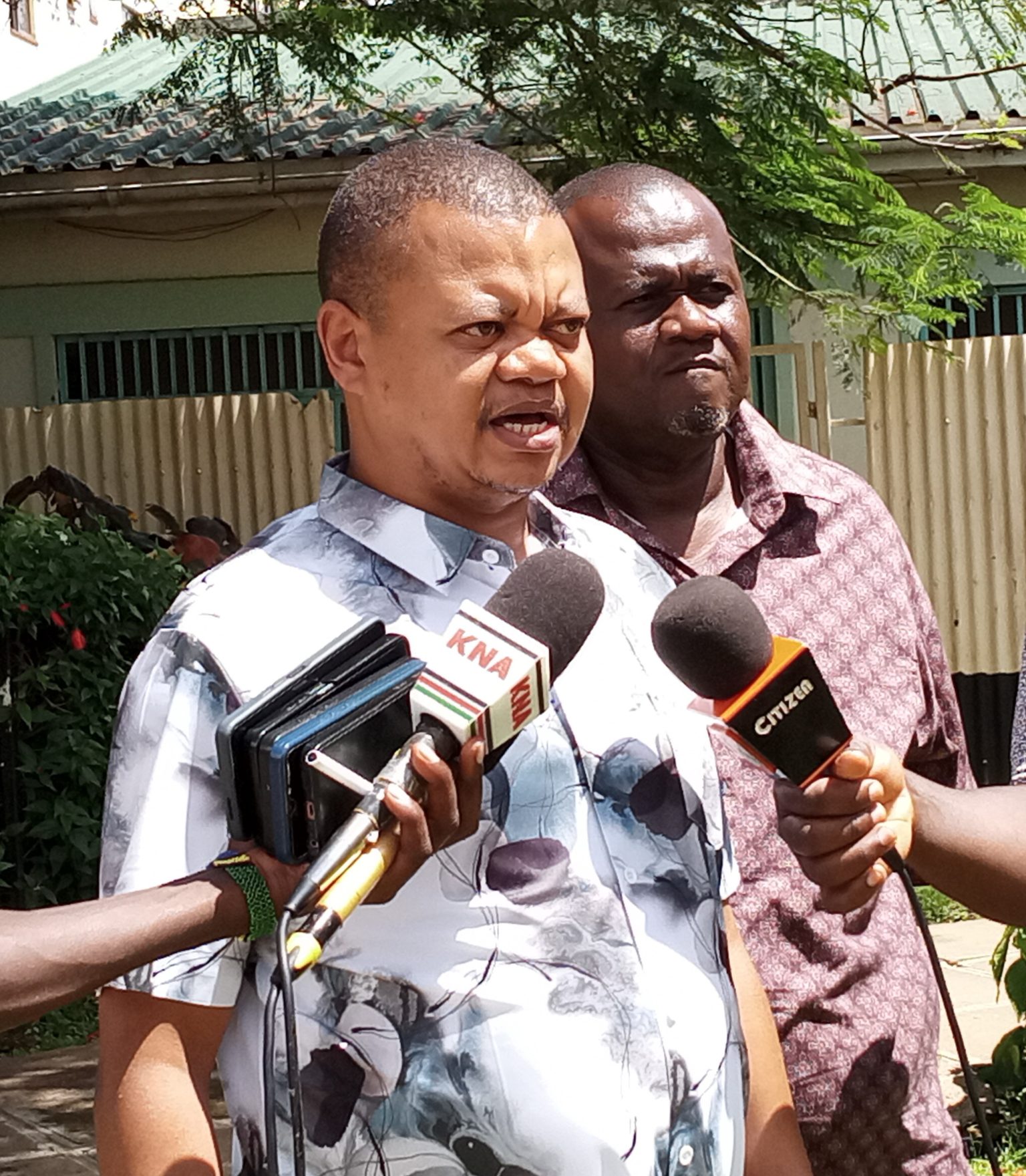
Speaking to the media in Kisumu on Friday, Kenya Maritime Authority Director of Maritime Trade and Development Joseph Kapeku said the policy seeks to position Kenya as an attractive investment destination by establishing a structured and coordinated framework for maritime investments.
Kapeku said stakeholder contributions were critical in strengthening the policy and ensuring it caters for all segments of society, particularly women, young people and persons with disabilities (PWDs).
“The policy seeks to make Kenya an attractive destination for both domestic and foreign investors. We are seeking views from stakeholders so that we can enrich and improve it while ensuring it focuses on all communities, including women, youth and persons with disabilities,” said Kapeku.
He noted that the proposed framework would introduce greater coherence in the maritime industry by streamlining investment procedures, making applications and registration easier for potential investors.
Kapeku observed that the sector had experienced challenging periods due to fragmented investment approaches, adding that the policy would provide a holistic framework to guide investments and improve coordination across the industry.
The proposed policy covers several areas, including fisheries, port operations, maritime transport and logistics, shipbuilding, ship repairs and recycling, container manufacturing, repairs and cleaning, ship handling, maritime education and training, maritime safety and security, as well as green energy.
He said the initiative aligns with the government’s Vision 2030 development agenda, which identifies the blue economy as a strategic priority for accelerating socio-economic transformation.
Kapeku added that an effective maritime investment framework would help improve livelihoods, generate wealth, create employment opportunities and promote inclusive economic growth, particularly in the Lake Victoria region.
Gideon Mwangi, Director of Planning at the State Department for Shipping and Maritime Affairs, said the blue economy had gained prominence in the government’s development agenda, having been identified as one of the priority sectors under Vision 2030’s Third Medium-Term Plan.
Mwangi explained that the Bottom-Up Economic Transformation Agenda (BETA) further elevated the sector by identifying key blue economy value chains capable of transforming the country’s economy.
He said the proposed investment policy and incentive regime would provide the necessary framework to attract investors into a sector with enormous untapped potential.
Mwangi noted that Kenya’s maritime resources, including its 640-kilometre coastline and extensive marine territory, offered significant investment opportunities that had yet to be fully exploited.
He said the government was now creating an enabling environment to encourage investors to tap into these opportunities and contribute to national development.
Meanwhile, Romanus Odhoch, a Dunga Beach resident and Lake Victoria investor, said the proposed policy could address longstanding challenges affecting fishermen and other players in the lake’s fishing industry.
Odhoch singled out maritime transport, safety and security, and shipbuilding as critical areas requiring urgent attention, arguing that weaknesses in these sectors had continued to undermine investment and livelihoods.
He raised concerns over what he termed misplaced investments, citing cases where fish processing plants were established far from fishing grounds instead of being located near Lake Victoria, where the fish is harvested.
He expressed hope that the proposed policy would encourage investors to establish processing facilities closer to fishing communities, particularly around Lake Victoria, reducing transportation costs and improving efficiency.
Odhoch also blamed industrial pollution for fish deaths in cages, saying the losses had caused significant financial setbacks for fish farmers and investors.
He further cited rampant fish theft, inadequate safety equipment and territorial disputes as major challenges confronting fishermen on the lake.
The investor lamented that many fishermen venture into the lake without life jackets, exposing themselves to preventable accidents and loss of lives.
He also raised concerns over alleged incursions by fishermen from neighbouring Uganda, noting that some Kenyan fishermen were unfamiliar with the international boundaries on the lake.
Odhoch called on relevant authorities to clearly demarcate and communicate the boundaries to fishing communities while strengthening surveillance and enforcement to protect local fishermen and their investments.